
CBCT NewTom 7G in ENT: What modern diagnostics for ears, nose, and sinuses looks like
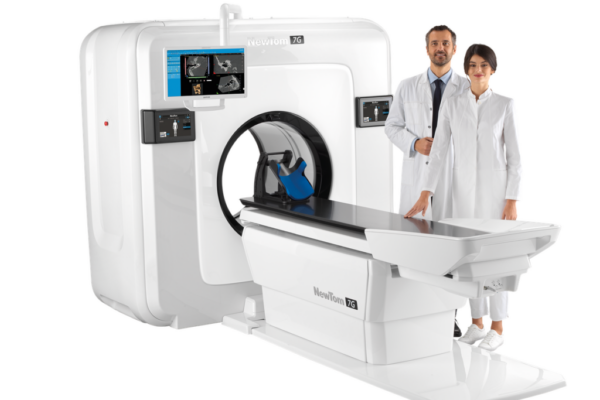
Headaches that cannot be explained by anything. Recurring sinus infections that keep coming back. A feeling of ear fullness that lasts for weeks. These are situations where an ENT specialist needs to look inside the head, and here enters an examination that was not commonly available ten years ago: CBCT.
What CBCT is in simple terms
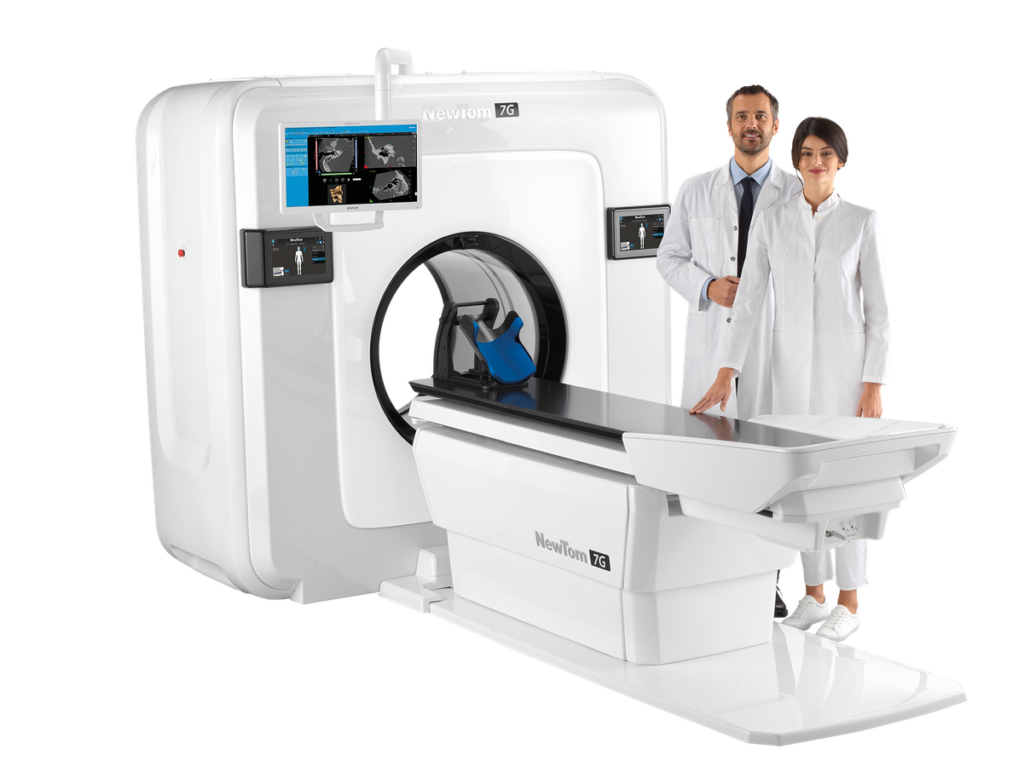
Imagine a computed tomography (CT) scan, but faster, more precise, and with a significantly lower radiation dose. CBCT (Cone Beam Computed Tomography) uses a cone-shaped X-ray beam that rotates around the patient’s head to create a three-dimensional model of the area being examined. The patient sits or stands calmly, the examination takes just a few seconds, and no contrast agent is used.
The result is a precise 3D image that the doctor can rotate in space and view from any angle, something that is not possible with a standard “flat” X-ray.
Why the 7G NewTom
The NewTom 7G is among the most advanced CBCT devices in the world. At Medirad, we were the first facility in Central Europe to use it for whole-body, predominantly bone diagnostics, including the ENT region. For the patient, this practically means three things:
Seeing even very small structures. The ossicles in the middle ear are smaller than a grain of rice. The walls of the paranasal sinuses are paper-thin in places. The 7G NewTom displays them with a resolution of 90 micrometers, a level at which the doctor can reliably assess whether the problem lies in ear structure, inflammation, or the result of trauma.
Multiples less radiation than a standard CT. This is particularly important for children and for people who come for repeated check-ups. The dose is so low that the examination can safely be repeated even after a few months without concern.
Speed and comfort. No narrow “tube” like in an MRI. The patient sits, does not feel confined, and is not enclosed in a space. This makes a huge difference for anxious patients and young children.
A word from MUDr. Vladimír Neuschl, PhD.
“In ENT, we have long had only two options: either classic two-dimensional X-rays, which did not tell us much, or large CT scans with high radiation doses. CBCT is exactly what was missing between them. In cases of chronic sinus inflammation, I can see within seconds whether the problem lies in the patient’s anatomy, thickened mucosa, or a polyp, and I can tell the otorhinolaryngologist exactly what to expect during surgery. For the patient, this is often the difference between months of uncertainty and immediate treatment decisions. And when it comes to a child with recurring ear infections, I can provide high-quality diagnostics without exposing them to unnecessary ionizing radiation.”
MUDr. Vladimír Neuschl, PhD., co-founder of Medirad
When an ENT doctor recommends CBCT
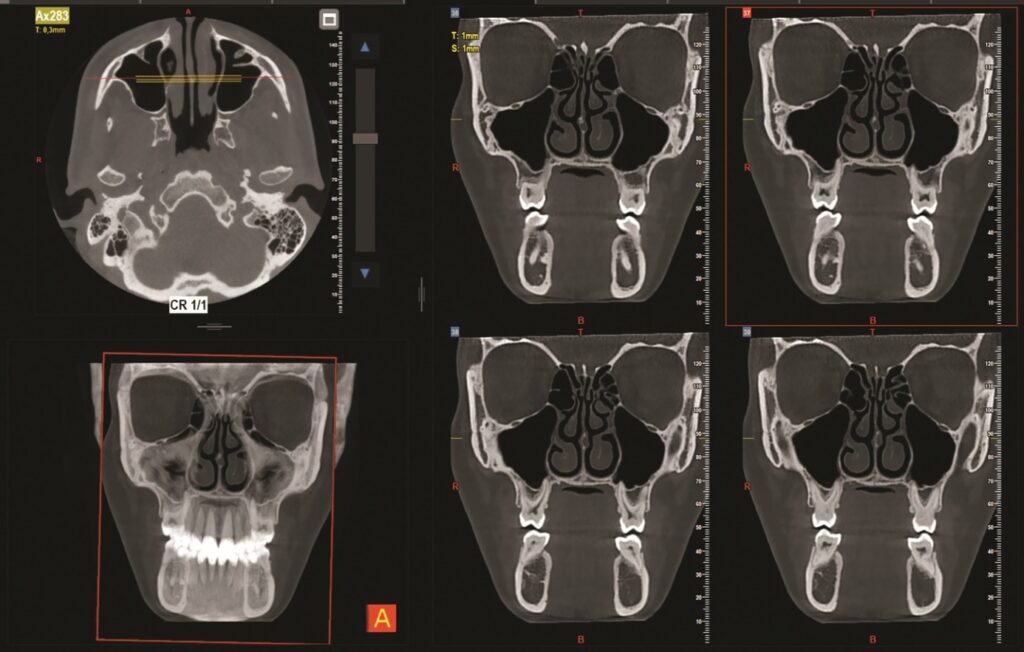
The most common indications for which patients come to us are: chronic sinusitis that does not respond to treatment: CBCT precisely shows which sinus is affected, how, and whether the problem is caused, for example, by a deviated nasal septum; problems with the inner and middle ear: pain, hearing loss, tinnitus, where the doctor needs to see the fine structures of the middle and inner ear; very precise preoperative and postoperative planning for cochlear implants; and head and facial trauma, where it is important to quickly assess bone structures before intervention.
For the patient: what to expect
The examination at our clinic takes approximately 15 to 20 minutes, including preparation, with the actual scanning taking just a few seconds. No special preparation is needed, and fasting is not required. After the examination, you leave with a radiology report that you can bring directly to your ENT doctor. No waiting, no complications.
CBCT is not a “better X-ray.” It is a completely different type of diagnostics that has opened doors for ENT medicine in recent years that were not available a decade ago. Thanks to it, many patients who have been going from doctor to doctor for years are finally getting an accurate diagnosis.